Friday, 17 July 2020

Letter to the Editor: Make A Stand Against Racism and Sexism

LETTER TO THE EDITOR:
MAKE A STAND AGAINST RACISM AND SEXISM 


It is correct, proper, and just that the honourable Speaker of the House Datuk Azhar Azizan Harun demanded that Baling MP Abdul Azeez retract his racist and sexist comments made on 13 July against Batu Kawan MP Kasthuri Patto. The decision should have been made more swiftly and decisively to prove Parliament’s unambiguous stand against racially and sexually derogatory language and conduct, and commitment to upholding a certain standard of decency and fair play. 

The purpose and intent of the doctrine of parliamentary privilege is to protect the freedom of parliamentarians to discuss sensitive or controversial issues that may affect laws or the running of a country. It is not intended to protect offensive and persecutory language designed to harass or intimidate political opponents and stymie actual debate and discussion. 

An elected representative who is a repeat offender should therefore face harsher sanctions than a mere retraction of the last offensive statement made. 

Abdul Azeez’s conditional apology is not an apology but an attempt to deflect blame and paint himself as a victim. His claim that he could not possibly be racist or be discriminatory against someone of dark complexion because he is himself of dark complexion cannot be accepted as sincere or truthful. Racism and colour discrimination can be internalised even by those from ethnic minorities or of dark complexion, just as misogyny can be internalised by women through years of social conditioning. 

His claim that he did not intend to be racist also cannot be accepted by any rational person. What other purpose could he have for heckling another elected representative by making fun of her skin colour? If it were indeed true that the seat Kasthuri Patto was sitting in was dimly lit, and Abdul Azeez had no intention of practicing racism or colour discrimination, he would not have asked her to “put on some powder”, but would instead invite her to step forward or present her views from a more brightly-lit area. Instead, his comments that she is “too dark and cannot be seen” and that she should “put on some powder” in order to make herself visible are malicious and intended to ridicule, humiliate, and intimidate a female elected representative as she was raising the very pertinent issue of the lack of female representation in the Select Committee. 

The question to be asked is not whether: “Is Abdul Azeez also of dark complexion?” but “Would he have uttered a similarly disparaging remark to someone of a fairer skin colour?”. The answer is necessarily no, because fair skin is not an object of ridicule and would not have the intended effect of silencing and humiliating the person being teased. 

The next question is “Would he have uttered similar words to another man, that he should somehow alter his physical appearance to make himself more attractive or visible?” The answer is again, no. Men have a long history of talking over women and interrupting or attempting to silence women with offensive and derogatory words often irrelevant to the issue at hand, designed to attack women’s femininity or physical appearance, to make women feel unwelcome and disrespected. This is simply not done to other men, except men who are disabled or who are seen as less masculine than the average man. 

The third question would be “Would he have uttered such words to someone belonging to a majority ethnicity or group, or someone who holds more political or social power than he does?” The answer again is no, because there would be grave repercussions for doing so, and Abdul Azeez’s history in politics indicates that he does not pick on those who hold the majority of support and power. Thus his words and conduct clearly constitute an act of punching down. Parliamentary privilege should never be extended to acts of punching down designed to harass and intimidate other elected representatives and stop useful and constructive debate. 

Elected representatives need to face serious repercussions for hate speech and offensive and discriminatory language and conduct. We have the right to hold them to a higher moral standard because we elected them to represent our values and interests. They should be subjected to greater scrutiny than the average citizen and be made accountable for their words and actions. 

Other elected officials should demonstrate that they are good allies who are capable of making a stand against injustice, inequality, and discrimination, by speaking up against racism and sexism, and standing up for another person facing bullying and unfair attacks, no matter which political party he or she is from. This is not because the tables could be turned one day and you could find yourself sitting on the Opposition bench, but because standing up for someone who is unfairly treated is the decent, just, and responsible thing to do. Your political views can differ from that of someone else, but you need to stand up for someone who is being unfairly treated or ridiculed based on his or her gender, race, faith, skin colour, physical attributes, or other vulnerability. This will persuade us that we, the electorate, have made the right choice in electing and supporting you, and that you are a representative who will protect and assist everyone, especially the marginalised and vulnerable. 

We need to take a stronger and more decisive stand against racism and sexism as a society. We know that it happens to women and people of different races in different settings – when it comes to the hiring of workers, the selection of tenants, or the treatment of employees and customers, for instance. We know that some categories of people are more susceptible to discrimination and unfair treatment than others, and we need to make it clear that it is unacceptable and we will not participate in the discrimination. We need to have the courage to say to someone in a position of power or privilege: “That sounded rather unkind”, “That doesn’t seem fair to me”, “It is only fair that we meet this applicant and interview him/her first”, “She/he is not done talking, please let her continue”, “She/he has a point, let’s hear it from her/him.” We need to centre and amplify the voices of those who are not heard and who had not enjoyed the same privileges and opportunities that we had. Just because we are not participating in the act of bullying or discrimination does not mean we are not complicit in systemic sexism, racism, and discrimination against those who hold less political and social power than we do. It is time for all of us to listen, learn, and change. And this change includes rejecting and voting out politicians whose values are not consistent with those of an equitable, just, and progressive society. 

WONG EE LYNN 
PETALING JAYA

Thursday, 25 June 2020

Letter to the Editor: Short-Term Thinking Is Destroying Malaysian Rainforests

LETTER TO THE EDITOR 
SHORT-TERM THINKING IS DESTROYING MALAYSIAN RAINFORESTS 


The Kedah State Government’s rush to resume logging activities in the Greater Ulu Muda Forest and the Terengganu State Government’s decision to degazette the Belara Forest Reserve to make way for plantations are proof that politicians are incapable of thinking of the long-term consequences of their decisions or prioritising the future of the Planet and country. 

Upon the conclusion of each General Election, politicians and state governments proceed with indecent haste to degazette and log forested areas and exploit natural resources before they get voted out in the subsequent elections. Clearly the lessons taught by the COVID-19 pandemic on the importance of preserving ecological balance and biodiversity are lost on Malaysian political leaders, who are wired for instant gratification and not long-term thinking. 

In theory, logging may appear to be a sustainable activity and timber may appear to be a renewable resource. However, this is no longer the case in countries such as Malaysia due to diminishing forests and the overexploitation of forests and forest products. 

The Food and Agriculture Organisation of the United Nations reports that Malaysia has seen a 60% decline in log exports since 1980 due to the decline in harvestable forest products. Surely there are enough clear indicators that the overharvesting of timber and forest products in the short term will lead to a greater loss of potential earnings in the long run, while increasing the risk of environmental disasters. 

In spite of the fact that forests are made up of flora and fauna that are capable of propagation and regeneration, tropical rainforests are hardly the renewable resources that politicians take them for. Primary forests are complex and fragile ecosystems. Once disturbed for logging, quarrying, or agricultural activities, secondary forest species and recolonisers such as fast-growing climbing plants and epiphytes grow in the clearings created by human activity. Over time, these recolonisers overtake the primary rainforest species in their numbers and affect the composition and biodiversity of a forest, changing its very nature, and increasing the risk of mass extinction of thousands of species. 

Disturbed and cleared rainforests, even if fortunate enough not to be clear-cut and converted into plantations, quarries, or dams, end up becoming unproductive wastelands that are incapable of supporting wildlife or providing the same variety of ecosystem services, such as flood mitigation and carbon sequestration, as primary rainforests. The reduced ability of a cleared or decimated forest to absorb solar energy and release water vapour leads to higher temperatures and a decline in rainfall. 

The Greater Ulu Muda Forest, for instance, is a critical water catchment area for the northern states of Kedah, Perlis and Penang and supplies water to, among others, the Ahning, Muda and Pedu Dams. Ulu Muda further provides economic and sociocultural services which include ecotourism, the harvesting of forest products, and a home for indigenous and rural communities. According to the World Wildlife Fund for Nature (WWF) Malaysia, the Ulu Muda forest complex supplies as much as 96% of Kedah’s, 50% of Perlis’ and 80% of Penang’s water supply. In addition to providing water for domestic, industrial and agricultural use, Ulu Muda also provides vital ecological services such as climate regulation, soil erosion prevention, biodiversity conservation and maintenance of soil, water and air quality. 

The 2016 drought affecting the northern states of Peninsular Malaysia is directly linked to logging activities in the Ulu Muda forest complex, which affected climate and water cycle patterns, resulting in a massive decline in dam water levels and a postponement of the paddy planting season. Logging in Ulu Muda would affect the survival and food and water security of a significant percentage of the population of Northern Peninsular Malaysia. Is the Kedah State Government prepared to deal with the environmental and economic fallout of the deforestation of Ulu Muda? 

As for the Belara Forest Reserve, this lowland tropical rainforest which is home to Great Hornbills and other vulnerable and endangered species was surreptitiously degazetted to make way for palm oil plantations. We can already foresee some of the immediate adverse impacts of the degazettement and deforestation. Orchard owners whose fruit orchards surround the Belara Forest Reserve will see reduced yield, and more contamination of soil and water due to the agricultural chemicals used in conventional oil palm cultivation. When forests are cleared, malaria and dengue infections will rise. Landslides and flash floods will be a common occurrence, as ground cover crops are eliminated in monoculture plantations. Perhaps there will be another disastrous flood, more severe than the one that destroyed much of the East Coast in the monsoon season of 2014-2015. Is that the price the people of Terengganu are willing to pay for a few extra jobs that come with the opening up of new plantations? Is the Terengganu State Government willing to bear the healthcare costs of mosquito-borne diseases and respiratory illnesses arising from haze and poorer air quality? Does the State Government have plans to deal with increased human-wildlife conflict and water and food insecurity following deforestation, floods, drought, and haze? 


Until State Governments can explain such plans to us in detail and persuade us that they are equipped to handle the loss and damage arising from the loss of forests, they cannot be said to be acting in the best interests of the state or its citizens, and their actions therefore lack moral and political legitimacy.  

Politicians need to be able to look beyond the next 5-10 years and think about the future of the country in the next 50-100 years. Politicians who put short-term personal benefits above long-term environmental protection and the well-being, health, and safety of its citizens have no place in a responsive and democratic society. 

WONG EE LYNN 
PETALING JAYA

Monday, 30 March 2020

Letter to the Editor: Keep Forests Intact To Prevent Disease Outbreaks

LETTER TO THE EDITOR: 
KEEP FORESTS INTACT TO PREVENT DISEASE OUTBREAKS 


For years, scientists have been trying to warn us that deforestation will unleash infectious diseases onto human populations, but this has been conveniently ignored by politicians wanting to make a quick profit from issuing licences for logging and agricultural expansion. Scientists from all over the world, including disease ecologists at Ecohealth Alliance who are studying malaria in East Malaysia, warn that human activities in forested areas, such as forest-clearing, road-building, mining, hunting, and logging, cause major disruptions to ecosystems, which then causes diseases to spread from their natural wild hosts to new hosts, including humans. International travel then helps some of these diseases spread to other countries and continents, causing significant damage to human health and economies. 

It is not merely the act of killing and consuming wildlife that contributes to the rise of zoonoses, namely, diseases that jump species from animals to humans. The mere act of rapid forest clearing, even without the hunting and poaching of wildlife that usually accompanies encroachment into forests, is enough to trigger chains of events that create the right conditions for deadly infectious diseases to spread to domestic animals and nearby human populations. 

Even as far back as the 1990s, epidemiologists at the University of Florida’s Emerging Pathogens Institute found a link between forest clearing in the Peruvian Amazon and the rise in malaria cases. The Journal of Emerging Infectious Diseases has documented the steep increase in malaria cases in areas in East Malaysia where forested land has been cleared for agriculture. Mosquitoes and other pathogens proliferate in forest edges where the boundaries between human habitation and forested areas become blurred, and primates and other disease carriers wander into human habitation. 

There are countless examples of direct pathogen spillover from wildlife to humans arising from forest clearing, hunting, poaching, and encroachment of agriculture and farmed animals into forests. Deforestation in South America is a factor in the transmission of rabies by vampire bats to cattle and humans. The Kyasanur Forest disease outbreak came after the encroachment of cattle and farms into Indian forests. The clearing of forests in Liberia for oil palm cultivation attracted forest-dwelling mice which then gave rise to the Lassa Virus when humans came in contact with the faeces or urine of the mice. The Nipah Virus outbreak in 1999 was caused by rampant deforestation in Indonesia which resulted in fruit bats losing their forest habitat and venturing into farms in Malaysia, where they inadvertently spread the virus to pigs, which then jumped species to humans. HIV is believed to have arisen from the hunting of primates in central African forests. Ebola has been associated with hunting in Gabon and the Republic of Congo. 

This does not mean that we need to clear forests and kill wildlife in order to eradicate disease. Many of these viruses exist harmlessly with their forest-dwelling host animals, because the animals have co-evolved with these viruses. It is human activity that make humans unwitting hosts for these viruses and other pathogens. 

To protect national and global biosecurity, it is imperative that we protect our forests and keep forests intact. Intact forests protect watersheds and water quality, are more resistant to fire and drought, regulate climate and weather patterns, provide habitat for a wide range of flora and fauna, and prevent wild species from crossing into human habitation and spreading both known and new diseases to domestic animals and humans. 

Keeping forests intact provide more economic benefits over the long term than clearing forests for agriculture and timber extraction. The economic benefits of logging are short-lived and can sustain only 1-2 generations at most. Intact forests absorb approximately 25% of the world’s human-generated carbon emissions and sequester far more carbon than logged, degraded, or planted forests. For generations, forested ecosystems have provided society with medicinal plants and compounds, and these medically-relevant species are often lost when forests are cleared, fragmented, or replaced with farms and monoculture plantations. Cleared and fragmented forests are less resilient to fire and drought, and the haze caused by forest and peat fires cause governments grave economic loss and increase healthcare costs. 

A 2016 Harvard University study published in Environmental Research Letters reported that the 2015 human-caused forest fires in Indonesia caused more than 100,000 premature deaths across Indonesia, Malaysia, and Singapore. Can Malaysia keep on bearing the loss of human lives and increased healthcare costs arising from forest loss and declining air quality? 

Ecohealth Alliance calculated that the Malaysian government spends around USD5,000 to treat each new malaria patient in East Malaysia. The healthcare costs of testing and screening individuals for COVID-19 and of hospitalizing and treating COVID-19 patients in Malaysia have not been disclosed yet, but we can assume it is tremendous, even before taking into account economic stimulus packages and financial aid for vulnerable groups. Can Malaysia bear the healthcare and socio-economic costs of managing and mitigating future zoonotic outbreaks arising from deforestation and human-wildlife interactions? 

We know the answer is no, yet the continued destruction of Malaysia’s tropical rainforests and natural environment indicates that our leaders have not learned their lesson. State governments continue to degazette forest reserves and issue logging permits with impunity, and politicians from both sides of the political divide rush to fill their personal coffers before they get voted out at the next General Elections with nary a thought for the environment, wildlife, or rural and indigenous communities. 

Even as the nation is still reeling from the economic shock of the Movement Control Order, and COVID-19 infection rates and deaths continue to increase daily, the Selangor State Government has decided to proceed with the degazettement of the Kuala Langat North Forest Reserve without giving environmental organisations and the affected local and Orang Asli communities the opportunity to consult, discuss, provide feedback, and prepare for a public inquiry on the degazettement proposal. Such cavalier disregard for the environment and for the voices of concerned citizens show how little our political leaders care about protecting biodiversity, safeguarding biosecurity, and mitigating climate change. This will return to haunt us in the form of droughts, floods, water and food insecurity, increased carbon emissions, poorer air quality, more human-wildlife conflicts, and the rise in tropical diseases. 

As a propitiatory gesture, the Selangor Menteri Besar has offered to replace the degazetted area with a ‘bigger area’ in Kuala Selangor, Sabak Bernam, and Hulu Selangor as a substitute forest reserve. This mindset is problematic, as the biodiversity and complexity of natural forests and the ecosystem services they provide cannot be replicated or replaced so easily. We are rapidly losing forested areas to agriculture and development, and states will soon run out of suitable sites to gazette as replacement forest reserves. Tree-planting activities and the gazettement of secondary forests and degraded land cannot be a substitute for the protection of natural and intact forests for all the reasons listed above. 

Science News and Global Biodefense have already identified Malaysia as the next ground zero for malaria infections. Global disease surveillance network USAID PREDICT has in 2017 identified at least 48 new viruses in Malaysian rainforest species, and only time will tell which of these viruses will be the next to jump species to humans. Considering the current rate of deforestation, our country will be susceptible to many types of tropical and zoonotic diseases. Malaysia is currently still doing its best to contain the number of COVID-19 infections and deaths. It will take us months to deal with the socio-economic fallout of COVID-19. If we don’t move fast to halt deforestation and protect our natural forests, we must then prepare to face the next zoonotic outbreak, and the ones after, that will arise from our callous disregard for the environment. 

WONG EE LYNN 
PETALING JAYA, SELANGOR 

(Photo credits: Wikipedia.org)

Monday, 10 February 2020

Film Review: Parasite


To me, Parasite’s best quality is that it doesn’t try, as many other films do self-consciously and ostentatiously, to be an art film. It doesn’t try to be too clever, but still ends up being perfectly brilliant all the same. It just has an effortless feel about it, as if all it aspires to be is a great story. And it is one. You won’t be able to stop thinking about it for a few days after watching it. 

All the characters are flawed yet likeable in their own way, from the highly-strung, self-involved Mrs. Park who is incompetent and clueless in the way only the very rich are, to the scheming and ambitious Ki-Woo with his Gatsbyish resolve to transform his dreams into reality. And all of them are victims in their own way, like Shakespeare’s characters who are more sinned against than sinning. The isolated and detached yet inoffensive Parks with their nannied, tutored, and indulged children are as much victims of capitalism as anyone else. Incapable of handling routine tasks and the vicissitudes of parenting without outsourcing the work to hired help, incapable of being forthright with the hired help out of fear of ‘losing face’, and doomed to always evaluate hired help according to whether the latter is discreet enough not to “cross the line” into familiarity and presumptuousness, the wealthy too are imprisoned by their wealth and social status. The poor who have to deal with the ignominy of urinating drunks and overflowing toilets and flooded subterranean homes are the obvious victims of capitalism, and in this category we find the close-knit Kim family whose only sin is to have the hubris not to obey and stay within their social station. 


Cursed with a scholar’s rock they could neither eat nor have a use for, tainted by the smell of radishes and poverty, stoically leaving socks hung up to dry before a window through which very little sunlight or hope enters, the Kim family's desire for upward mobility eats away at them, consuming them from within like an insatiable parasite. As the movie progresses, the viewer cannot help but question who the real parasites and bottom-feeders of society are. Yet this is a movie without clearly defined heroes or villains. One of the underlying themes of the movie is the idea of ‘fitting in’, and whether the impoverished Kim family that has ingratiated its way into employment in the wealthy Park home fits into its role and the social strata its members found themselves in. 

One of the factors that made this movie such a success (apart from the brilliant screenwriting and directing, I mean) is the way all the thespians fit into their characters and played their roles so credibly and convincingly. That ‘Parasite’ swept virtually all the awards at Palme D’Or, Golden Globe, BAFTA, and Oscars is definitely fitting. 5 stars out of 5! Catch ‘Parasite’ while you still can!

Saturday, 1 February 2020

Letter to the Editor: Zoonoses and Disease Outbreaks - It's Time We Take A Closer Look At Animal Agriculture, Not Just The Wildlife Trade

LETTER TO THE EDITOR
ZOONOSES AND DISEASE OUTBREAKS: IT’S TIME WE TAKE A CLOSER LOOK AT ANIMAL AGRICULTURE, NOT JUST THE WILDLIFE TRADE 


The international community heaved a collective sigh of relief when China announced a ban, albeit temporary, on wildlife trade in an effort to contain the 2019-nCoV coronavirus (Jan 26). Environmental and wildlife conservation groups both outside and within China wasted no time in urging China to make the ban permanent, citing the protection of human health, biodiversity, and wildlife populations as the reason. 

It would be commendable if China were to codify and enforce a permanent ban on wildlife consumption and trade, but in the meantime, a temporary ban would help contain further spread of the virus and give some measure of protection for wildlife. Yet the recent plaudits for China’s bold move is marred by the fact that until the announcement was made, the outrage and vitriol directed at China by the media and international community smacks of double standards, hypocrisy, racial malice, and schadenfreude. 

The media and international community persuaded itself that China’s predilection for consuming wildlife and exotic meats is the reason why it does not deserve its recent wealth and rise as a world superpower, and that its citizens deserve to suffer for their barbarism and dirty and uncivilised ways. If the international community were really so concerned about wildlife conservation and biodiversity, we would see the same level of outrage over fox hunting in the United Kingdom, the USA’s trophy hunting industry, the systematic hunting of minke whales by Norway, Australia’s kangaroo meat industry, and Canada’s annual slaughter of seals and sea lions. Yet for the most part, these countries have been able to carry on exploiting and killing wildlife with relative impunity, and these activities are passed off as being civilised, sophisticated, or an economic or environmental necessity. 

The fact that some countries with a longstanding culture of exploiting, killing, and consuming wildlife have managed to avoid being the country of origin of zoonotic disease outbreaks, while other countries suffer huge losses from the same, indicates that there is more we have yet to learn about the wildlife trade, the spread of pathogens, and ways to contain and control disease outbreaks. 

It would be neat and convenient indeed if the blame for the 2019-nCoV coronavirus outbreak could be placed squarely on Wuhan’s wildlife markets. However, scientists are still struggling to pinpoint the original host of the virus and how it first infected people. The premature blaming of snakes and bats as the original hosts of the virus shows us how truly novel this coronavirus is and how little we know about it, and indeed, about other zoonotic diseases. Until today, the scientific and medical community have yet to be able to confirm that Ebola originated from bats. 

This leaves us with two issues to be addressed, namely, that: 
(1) Wildlife needs to be protected in and of itself, and measures must be taken by all countries to end wildlife trade, ban the exploitation and killing of wildlife, and halt the destruction of wildlife habitats, whether or not the killing of any particular species or population has an adverse impact on human health and safety; and 

(2) In order to protect human health, we need to protect animal health and welfare. To do so, we need to stop scapegoating citizens of developing nations who consume wildlife and bushmeat, and instead, examine how intensive animal agriculture and low animal welfare standards have directly resulted in threats to human health, safety, and well-being. 

Following China’s official announcement linking the virus to Wuhan’s wildlife markets, social media was rife with comments such as “Why can’t they just be civilised and eat domestic farmed animals like the rest of us?”, “Serves them right for eating endangered animals instead of animals raised for food!”, and even “Eat more chicken and beef!”, as if eating farmed meat could miraculously inoculate humans against zoonotic diseases. 

History has shown us repeatedly that not only does eating farmed meat not inoculate humans against diseases, but that intensive animal agriculture is a major driver of zoonosis and disease outbreaks. 

If zoonotic diseases such as SARS, Ebola, West Nile Virus, Nipah Virus, Avian Influenza, and 2019-nCoV were merely transmitted to those who directly handle and consume wildlife, they would not have had the pandemic effects that they did. But wildlife diseases can and do afflict domestic animals, and cross species to humans with alarming rapidity. Farm animals frequently become intermediate or amplifier hosts for pathogens. 

Researchers, including those from the Centre for Global Health Science and Security of Georgetown University, Washington DC, estimate that 70% of zoonotic diseases come from wildlife, and then made the leap from wildlife to humans. Deforestation and human encroachment into previously forested areas for agriculture have been identified as factors in the spread of zoonosis, as farm and domestic animals come into contact with wildlife and wild birds. The crowded and unhealthy conditions in factory farms then expedite the spread of viruses such as Avian Influenza, and bacterial pathogens, such as E. coli, Campylobacter and salmonella. The Japanese Encephalitis Virus, for instance, was transmitted by the Culex mosquito (which usually feeds on wild birds and mammals) to farmed pigs, which became carriers for the virus and then amplified these infections in humans. The Nipah Virus became an outbreak because virus-infected fruit bats transmitted their virus to the farmed pigs via the consumption of fruit contaminated with bat saliva or urine. In the case of the Nipah Virus outbreak in Malaysia, there was no evidence of direct transmission from bats to humans, and almost all the human cases had direct contact with the infected pigs. Clearly abstinence from hunting, poaching, and wildlife products would have made no difference at all in the case of the Nipah Virus. 

Intensive animal farming is usually characterised by high animal population density and low genetic diversity, both of which are factors that promote increased pathogen transmission and adaptation. Farmed poultry live in conditions that suppress their immunity and make them more susceptible to infections. Avian influenza virus is reported to be “subclinical or of low pathogenicity in wild birds”, yet become highly pathogenic when transmitted to domestic poultry. A 2010 study published in Veterinary Record reports that a large-scale UK survey found that battery-cage poultry farms are 6 times more likely than cage-free farms to be infected with the strain of salmonella most commonly associated with food poisoning. 

The risk of zoonotic diseases must be managed through improvement in farm animal welfare standards, and disease management and control measures. These can include mitigating measures such as using slower-growing animal breeds, creating diets and management conditions that minimise stress to animals, increasing surveillance and vaccination to monitor and minimise the spread of disease, limiting live animal transportation time to reduce stress and cruelty, investing more in research and knowledge transfer to improve farm animal health and welfare standards, reducing non-therapeutic antibiotic use to reduce the risk of antibiotic resistance, and encouraging consumers to eat less or no meat products or replace conventional meat products with higher welfare animal products such as grass-fed beef or free-range or certified humanely raised poultry. 

On a personal level, we can reduce and mitigate the risk of zoonotic diseases and infections by choosing a plant-based diet and limiting our exposure to wildlife, which should remain wild and protected against unnecessary human contact. At an institutional level, those with the political and economic leverage must reduce and mitigate the said risk by disallowing deforestation and expansion of agricultural activities into forested areas in order to minimise wildlife-to-domestic-animal and animal-to-human viral spillover, tightening biosecurity controls in farms and places that process or handle animal products, improving animal health and welfare standards, replacing factory farming systems with more humane and sustainable systems, setting restrictions and guidelines on the transportation of livestock and poultry, and removing barriers and creating incentives for the development, production, and consumption of plant-based foods and lab-grown meat to replace and eventually phase out conventionally-produced farmed meat. 

WONG EE LYNN 
PETALING JAYA, SELANGOR

Thursday, 16 January 2020

Letter to the Editor: Cease Feeding of Wild Birds and Other Wildlife


LETTER TO THE EDITOR:
CEASE FEEDING WILD BIRDS AND ANIMALS


I am surprised by the advice offered by the Taiping Zoo and Night Safari director Dr. Kevin Lazarus to tourists not to overfeed wild Brahminy Kites (‘Don’t overfeed brahminy kites’, The Star, 15 Jan 2020). I would have expected an expert like him to strongly object to the practice of feeding wild birds and other wild animals.

The advice given not to ‘overfeed’ the Brahminy Kites is also difficult to measure and act upon, because tourists and tour boat operators are not veterinarians or wildlife ecologists and are not able to estimate how much food to give and what would constitute overfeeding. They would not know if other tour boat operators or tourists who had come earlier in the day have already fed the birds. It is difficult, if not impossible, to draw up guidelines on appropriate and sufficient feeding of wild birds and expect tourists and tour boat operators to adhere to these guidelines.

Further, tour boat operators in Pulau Langkawi, Kuala Sepetang, and similar areas provide the Brahminy Kites and eagles with the cheapest food possible, namely, chicken skin, entrails, and gizzards, which are sourced from broiler farms that use antibiotics and growth promoters, and this will have an adverse impact on the wild birds’ health and immune systems in the long run. As the good doctor himself acknowledged, feeding the wild birds with chicken skin and fat will result in calcium deficiency, obesity, and ultimately, population decline as the wild birds’ eggs may break during incubation due to the aforementioned calcium deficiency.

The well-being of wild birds and other wildlife should be given priority over the trivial whims of tourists who wish to be entertained. Wildlife experts and the authorities should be very firm about not permitting the feeding of any kind of wildlife. The practice of feeding wild animals cause more harm than good and should be prohibited. PERHILITAN and the Forestry Department should apprehend and fine offenders who ignore signs not to feed wildlife.

Feeding wild animals alters their natural behavior and makes them less afraid of humans. This could expose them to greater risk of being trapped, poached, or poisoned. Almost every human-wildlife conflict incident that we read of starts with the narrative of well-intentioned people feeding wild monkeys, boars, bears, sharks, or other animals, and ends with a dead or injured human or animal. Fed animals also end up killed when they enter human territory for more food.

Diseases and pathogens also spread more easily among wild birds and animals when they congregate to feed. Animals that are usually solitary or who socialize only with their own species end up having increased inter-species contact when they congregate at feeding sites, and may contract salmonella and other pathogens when they come in contact with other animals’ saliva and feces. This is what happened to the White Ibis population in Georgia (USA), and we should make every effort possible to ensure this does not happen to our own wild bird and animal populations.

I am aware that tour boat operators rely on activities such as the feeding of Brahminy Kites and White-Bellied Sea Eagles to give their business a competitive edge and provide an interactive experience for their clients. It is only natural that tourists would want to feel as if they have had close contact with a wild species, or have ‘helped’ a local species by providing food. I propose setting up hatcheries to increase native fish stocks, and then getting tourists to pay to release the fish fry or fingerlings into the sea. This will not only replenish native fish populations but also provide job opportunities for local communities. Tourists like to feel that they are ‘giving back’ to the local community and wildlife, and releasing fish fry may be a feasible alternative to feeding wild birds with inappropriate food.


WONG EE LYNN
PETALING JAYA, SELANGOR


Friday, 3 January 2020

Sunday Byline: Season of Giving - Tis the season to redefine true charity and volunteerism

I was invited to write a byline for the New Straits Times on the topic of volunteering and donating to charity. This byline was published on Sunday, 22nd December 2019. You can find a link to it here: https://www.nst.com.my/lifestyle/sunday-vibes/2019/12/549916/tis-season-redefine-true-charity-and-volunteerism 


SEASON OF GIVING 


True charity and volunteerism begin with the desire for change, writes Wong Ee Lynn 

‘Tis the season to fill the needs of others, as well as to simplify and declutter — mostly our hearts, but also our homes. But before you throw the junk lying around your house into a big bag to donate locally or overseas, pause and think for a moment about what you’re giving and why. 

Every holiday season, requests pour in from members of the public who usually want to do one of three things: 

1. They have spring-cleaned their homes and want to 'donate' their cast-off clothing and other items to charities; 
2. They want to do a one-off festive meal, party, or programme with vulnerable or disadvantaged communities, usually with children living in children’s homes or shelters; or 
3. They want to do a one-off 'volunteering' session or visit, often with children in tow, to teach their children to be 'grateful'. 

Donating to charity and volunteering are meant to be life-enhancing experiences which give people the chance to improve the world in their own small way. You’re dedicating your time and resources to people that may have less than you, helping to build communities and strengthen bonds between people. 

But should charity projects and volunteering sessions just be limited to donating your discards or turning up, doing the job, taking heart-warming photographs and going home? Are you doing more harm, in the pursuit of doing ‘good’? 

DONATING YOUR THINGS 

While you may feel ‘generous’ for giving away your extras, donating your discards may not be a charitable act at all. You’d be surprised to see the amount of scribbled-on and torn books, tattered and stained clothing, broken toys and ornaments, and broken appliances and gadgets received simply because people feel that poor and vulnerable communities "have nothing" and should therefore be grateful to get anything at all. 

This is unfair to volunteers, who then have to waste their time, energy and fuel sorting through rubbish and transporting unsuitable items to the rubbish or recycling bin. We need to remind ourselves that the poor and minorities are not our landfill, and volunteers are not our rubbish pickup or waste sorting service. 

We need to think not only about what we give and how we give it, but also why we give it. Just because it makes us feel better (and cleans out our houses at the same time), doesn’t mean it is what is needed or wanted by vulnerable communities. 

Perhaps we should look a little deeper into our hearts and wallets when we claim, “I don’t have money to give to the poor, but I have a lot of stuff to give away”. Maybe this means examining how we spend and save, so we can prioritise giving regularly to worthy causes, and donating money and necessities instead of just our discards. 

What you should do 

Please go through the items you are giving away and ensure that they are all clean, usable, and functioning. Get items repaired before donating them. Redirect donations to the relevant charities: Wearable clothes can be sorted according to category (men's, women's, and children's) for relevant organisations, and faded, tattered, and stained clothes should go into the Kloth Cares fabric recycling bins (www.kloth.com.my). 

If you are getting your children to help with the collection and donation process, ask them: "Imagine you are giving this to a friend. Would your friend be happy to receive this? Would YOU be happy to receive this?' Use this as a teachable moment to teach children what generosity and kindness really means. 


FESTIVE MEALS AND PARTIES 

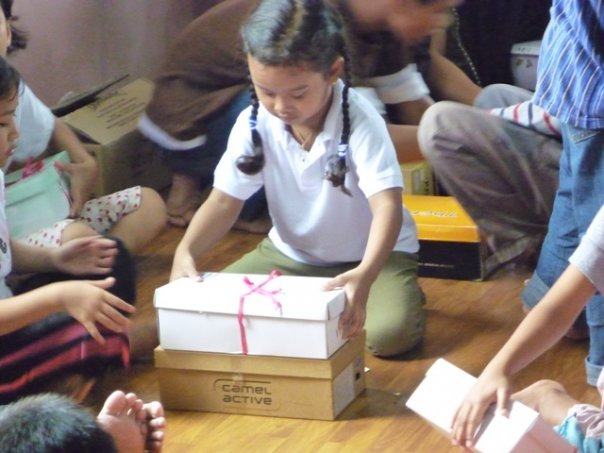
When the festive seasons roll in, welfare homes and organisations receive many requests from well-wishers to conduct ‘parties’ and ‘visits’ for the residents or beneficiaries so that they could experience a little of the festive ‘joy’ that they purportedly lack. 

Junk food pour in, as do toys and gifts. In the age of social media, many corporations and groups have opted to hold their celebrations in children’s homes, hospitals, or with homeless or other vulnerable communities. 

While the intention to bring some joy to the needy is a noble one, one wonders whether these parties are done for the benefit of the donors or the recipients. It can appear to onlookers and beneficiaries that the donors are doing it to make themselves look good, and because throwing holiday parties for the needy is the “in” thing to do. Some beneficiaries may not share your excitement for a particular holiday, and it can even make the difference between the haves and the have-nots even more glaring and stark. 

It is not only the adult recipients who feel embarrassed at being treated like ‘charity cases’. I remember volunteering at a children’s shelter years ago when the children told me we had to end lessons half an hour early so they could get ready for some visitors who had come to celebrate their child’s birthday at the shelter. While the younger children were understandably excited about this break in their daily routine, one of the older boys’ voice was dripping with sarcasm and resentment when he told me: “Yes, they are coming to show us how rich people party. To show us we have nothing, no mother and father.” 

There is further the risk that these events and one-off ‘volunteering’ sessions provide strangers with access to vulnerable children who may be recovering from abuse and trauma. I remember an incident in which a child started crying during a colouring session with volunteers. The other children started shouting at the crying toddler to be quiet or the ‘big brothers and sisters’ will not visit again, and said it was probably the reason why the previous batch of ‘big brothers and sisters’ never returned for a visit. The reality is that the volunteers probably did not return because it was a one-off CSR project, but the children assumed that it was because they were ‘naughty’ and they were left blaming themselves and each other. What you should do 

When planning festive meals, parties, and programmes, ask the organisation first if that is what they really want. Find out an organisation's needs, which usually extends to the rest of the year. An organisation might inform you that instead of a fast food meal or plastic toys for the children in their care, what they really need is a maths tutor. 

Respect and understand the wishes of the organisations and beneficiaries, and take time to ask and listen. Instead of having 40 volunteers play games with children for just one day a year, you could arrange for volunteers to take turns tutoring children and helping them with homework for 40 weeks of the year. 

You also need to check with the organisations first if the proposed programmes are acceptable. A friend once informed me that they failed to check with the administrators of a school for refugee children if the games they would be playing are appropriate for the children. The party organisers had ‘Pin The Tail On The Donkey’ lined up as one of the games, but the children were reluctant to play, and the administrators of the school had to quickly explain that blindfolding can bring back flashbacks of being arbitrarily blindfolded and taken away by the military. Faux pas such as this one could be avoided by checking with the organisation or administrators in advance. 

There may be privacy and safety concerns which means that the beneficiaries are not okay with being photographed. And some of the children may have experienced abuse and have trust and attachment issues, so having people visit them once, play with them, and never return will feel too much like abandonment. 

Come and volunteer with underprivileged communities only if you have something meaningful or important to contribute, if you have special skills to share (e.g. you can help repair and repaint their home), or if you are able to commit to regular volunteering and service. Seasonal parties and special meals for the underprivileged are not unequivocally a bad thing. It often provides a welcome break from routine and plain meals. But you need to also find out the actual needs of organisations and their beneficiaries, and find ways to keep the momentum going for the rest of the year to meet these needs the best you can. 

ATTITUDE OF GRATITUDE? 

Stop asking volunteers if you and your children can come "visit" the individuals who will be receiving your donations. Vulnerable communities are not your petting zoo. I’ve witnessed beneficiaries being forced to shake hands, receive hugs awkwardly, and pose for photos. It makes them feel even more powerless and self-conscious. Nobody likes to feel like they are charity cases or are there for other people to stare at. 

There are also parents who want their children to see "poor people" firsthand so they can "be grateful for what they have" and see what might happen to them if they fail to work hard, study hard, or listen to one's parents. This is unacceptable because you are teaching your children to make assumptions about people who are already struggling. Not all who are poor are lazy or have done bad things. Many were disenfranchised and disadvantaged from the beginning and don't have the same opportunities you did. Truth be told, many people who are lazy, selfish, unscrupulous and unethical end up in positions of wealth and power anyway. 

Visiting welfare homes and homeless communities to teach oneself or one’s children ‘gratitude’ is still essentially a selfish act — the focus is still on the giver, not on the recipients. Gratitude does not cultivate empathy. Gratitude makes the giver feel morally and materially superior, it does not make the recipient feel understood, heard, and seen. 


What you should do 

People who are grateful that their lives are not as hard as that of the recipients are rarely the same people who feel motivated to fight inequality and injustice. Instead of saying to yourself: “I am grateful I at least have a roof over my head and good food to eat”, ask yourself: “What are the systems that created this injustice and inequality in the first place? What am I doing to contribute to these systems? How can I help address these injustices? Which organisations and individuals are working on creating long-term solutions, and how can I help them?” 

It’s time we stop feeling content with merely handing out a largesse of toys and food during the festive season, and instead aim to use our talents and resources to make the biggest possible positive difference to society. 

Most of the volunteers and donors you see out there didn’t start off as full-time humanitarians or millionaire benefactors. They started small, and acquired more skills and experience and increased their capacity to give and to volunteer along the way. We should all aim to do the same - start by choosing the causes we are passionate about, and devote a certain amount of time and resources to it consistently. Doing good shouldn’t be just for a season. 

It’s time we turn the ‘season of giving’ into a lifelong journey of becoming a truly compassionate, just, and socially responsible nation. 


Wong Ee Lynn has over 20 years of experience volunteering for various causes, from environmental and animal protection to working with urban disadvantaged children and homeless communities.